Catch-up bookkeeping services for UK businesses
If your bookkeeping has fallen behind, we bring it back up to date, working around whatever deadline you are facing.
In short: NDCA is an ACCA-regulated accountancy practice for UK businesses whose bookkeeping has fallen behind. We reconcile every bank account, rebuild missing records from bank statements and move the books onto Xero, at a fixed price agreed before we start.
NDCA offers bookkeeping repair as a specialist, one-off project, separate from our ongoing bookkeeping service. The repair brings historic records up to date. The ongoing bookkeeping service keeps them clean afterwards. We work primarily on Xero.
What NDCA clients say
Verified Google reviews from NDCA clients.
Posted on Google
 James Stallwood
Trustindex verifies that the original source of the review is Google.
What can I say. When I first met Noor over at NDCA I instantly knew he was the man for the job. Straight away he made me feel at ease about my accounts and my tax situation which I personally felt were an absolute mess. Well here we are! 6 months later, limited company open and everything in order. I can now truly relax and focus on growing my business. NDCA has truly dissolved my tax anxiety. Cannot recommend them enough.Posted on Google Usman MajidI recently used NDCA for my Self Assessment, and I couldn't be happier with the service. They were professional, efficient, and took all the stress out of the filing process. They ensured everything was accurate and handled my queries with great expertise. I highly recommend NDCA to anyone looking for reliable tax assistance.Posted on Google
 Oliver HeadReally good experience using NDCA for my year end accounts and CT600. Everything was handled professionally and submitted on time with no stress. They explained the numbers clearly and kept me updated throughout the process. Communication was great and they were always available to answer any questions. Highly recommend NDCA for year end accounts and corporation tax work 👍Posted on Google
 Alomgir KabirNDCA made my self assessment so easy. Everything was explained clearly, and they handled it all quickly and efficiently. Very professional and always easy to get hold of. Would definitely recommend 👍Posted on Google
 Przemek HeronThey made everything easy to understand and handled the whole process quickly aith no stress. Always easy to get hold off and very helpful. Definetely recommend
In short: NDCA is an ACCA-regulated accountancy practice for UK businesses whose bookkeeping has fallen behind. We reconcile every bank account, rebuild missing records from bank statements and move the books onto Xero, at a fixed price agreed before we start.
NDCA offers bookkeeping repair as a specialist, one-off project, separate from our ongoing bookkeeping service. The repair brings historic records up to date. The ongoing bookkeeping service keeps them clean afterwards. We work primarily on Xero.
What is on this page?
- What our bookkeeping catch-up service covers
- How NDCA works
- Why fixing the books matters
- Get your bookkeeping back onto a clean system
- Apron for invoice capture
- Who we work with
- How to choose a bookkeeping catch-up service
- Catch-up checklist: what to gather first
- Deadlines and penalties: a worked example
- Switching from another accountant
- Bookkeeping deadlines and penalties at a glance (2026/27)
- Bookkeeping repair FAQs
What our bookkeeping catch-up service covers
A named accountant takes your records as they are and brings them back to a clean, reconciled, deadline-ready state. That includes:
- Bank reconciliation across every account, often going back twelve months or more
- Credit card and loan account reconciliation
- Supplier statement reconciliation, including missing invoices
- Sales ledger clean-up, including aged debtor write-offs and disputed items
- VAT corrections for prior return periods
- Payroll journals reconciled against actual bank movements
- Director’s loan account rebuild for limited companies
- Property income and expense reconstruction for landlords
- CIS payment and deduction history rebuild for construction firms
- Migration from a broken or non-MTD-compliant system into Xero
- A clean handover, with a summary of what was wrong and what was fixed
Once the clean-up is complete, you have two options. Take the books back in-house and run them yourself, or move onto our ongoing bookkeeping service. Either way, the foundation is repaired.
How NDCA works
What you can expect:
- Fixed-quote project
Bookkeeping repair is the one service we do not bundle into a monthly fee. Each project is quoted up front based on the state of the records, the period to be repaired and the deadlines involved. You know the cost before we start. No clock-watching, no surprise invoice. - A named accountant from start to finish
A named accountant handles your repair from beginning to end. You get a direct line to the person doing the work, not a project manager who relays messages. - Built for deadlines, not perfection theatre
Most bookkeeping repair has a real deadline behind it: a year-end, a VAT return, an MTD start date, a finance application, a switch to a new accountant. We prioritise the work in the right order to meet that deadline first, then tidy up everything else afterwards.
Why fixing the books matters
Accurate, reconciled records are the foundation for everything that follows.
Accurate records give your accountant the information needed to identify errors, calculate liabilities correctly and deal with outstanding filings. Clean bookkeeping is the foundation for VAT returns, Corporation Tax, Self Assessment, annual accounts, management accounts and cash-flow forecasting and it helps identify potential director’s loan account issues so they can be dealt with appropriately.
The longer inaccurate or incomplete records stay unresolved, the harder it becomes to understand what the business actually owes, owns and earns.
Get your bookkeeping back onto a clean system
Most bookkeeping repair projects end up on Xero, whether that means rebuilding a Xero file that has fallen behind, migrating from another system into a fresh Xero setup or fixing a migration that went wrong the first time.
If your records are in spreadsheets, paper, QuickBooks, FreeAgent, Sage or another system, we migrate the historic data into Xero as part of the repair. By the end of the project, you have one clean file with everything in it.
Apron for invoice capture
Most repair projects involve missing receipts and supplier invoices that never made it into the original system.
Forward or photograph the missing documents, and Apron captures the details and matches each one to the bank transaction it relates to, helping the clean-up finish efficiently.
Who we work with
NDCA bookkeeping repair clients fall into a few groups:
- Growing limited companies with incomplete or unreliable records
- Directors approaching a year-end with records not yet up to date
- Companies switching accountants and inheriting a messy file
- Anyone with VAT, CIS or payroll history that needs repairing
- Anyone who has fallen behind after trying to manage their own bookkeeping
- Teams preparing for an important filing deadline, or needing clean records before moving to management accounts or cash-flow forecasting
- Anyone needing to bring their records up to date for Making Tax Digital for Income Tax
- Sole traders, landlords and trades and construction firms with records that need catching up
If your records have fallen behind or you are unsure where to start, tell us what you have and we can assess the work required.
How to choose a bookkeeping catch-up service
Before you hand over months of records, check five things.
- A fixed quote before work starts. Once the accountant has seen how far behind the records are, you should know the full cost, not receive an hourly bill at the end.
- A regulated firm. Check the firm is supervised by a professional body such as ACCA, ICAEW or AAT, so you have a route to complain if something goes wrong.
- Experience with your tax position. VAT, CIS and payroll all add work to a catch-up. Ask whether the firm has repaired records with the same mix.
- A clear order of work. The most urgent filing should come first, whether that is a VAT return, a Company Tax Return or annual accounts at Companies House.
- What happens afterwards. Ask whether you can move straight onto ongoing bookkeeping, or whether you will be handed the files and left to keep them up to date yourself.
Catch-up checklist: what to gather first
- Bank and credit card statements for every business account, covering the whole period that is behind
- Sales invoices and reports from platforms and payment providers such as Stripe, PayPal, Shopify or Amazon
- Purchase invoices and receipts, including photos on your phone
- Payroll reports and CIS statements, if you run payroll or work in construction
- Previous VAT returns and your VAT registration details, if you are registered
- Loan and hire purchase agreements and any director loan account records
- Your last filed accounts and Company Tax Return, if the company has filed before
Missing documents do not stop the work. Entries can often be rebuilt from bank data and supplier statements, and anything that cannot be verified is flagged to you.
Deadlines and penalties: a worked example
A limited company with a year end of 31 March 2026 must:
- file its annual accounts at Companies House by 31 December 2026
- pay its Corporation Tax by 1 January 2027
- file its Company Tax Return (CT600) with HMRC by 31 March 2027.
Accounts filed late at Companies House attract a penalty of £150, rising to £1,500 once they are more than six months late. For Company Tax Returns due on or after 1 April 2026, HMRC charges £200 for a late return and a further £200 once it is three months late, rising to £1,000 each if returns are late three times in a row. Late VAT returns build up penalty points, and a business filing quarterly receives a £200 penalty once it reaches four points.
Bringing the books up to date before these dates avoids penalties that cannot be recovered later.
Tell us how far behind the books are
Tell us your accounting software, the period that needs catching up and any VAT, CIS or payroll complications. We will come back with a fixed price and a timeline.

Reviews
Discover why businesses trust us for dependable accounting services and practical financial advice.
What NDCA clients say
We work with businesses across the UK and beyond, delivering results that speak for themselves. Browse our reviews to see the impact we have made, and if you have worked with us, we would love for you to leave a review on Google
Posted on GoogleJames StallwoodWhat can I say. When I first met Noor over at NDCA I instantly knew he was the man for the job. Straight away he made me feel at ease about my accounts and my tax situation which I personally felt were an absolute mess. Well here we are! 6 months later, limited company open and everything in order. I can now truly relax and focus on growing my business. NDCA has truly dissolved my tax anxiety. Cannot recommend them enough.Posted on GoogleUsman MajidI recently used NDCA for my Self Assessment, and I couldn't be happier with the service. They were professional, efficient, and took all the stress out of the filing process. They ensured everything was accurate and handled my queries with great expertise. I highly recommend NDCA to anyone looking for reliable tax assistance.Posted on GoogleOliver HeadReally good experience using NDCA for my year end accounts and CT600. Everything was handled professionally and submitted on time with no stress. They explained the numbers clearly and kept me updated throughout the process. Communication was great and they were always available to answer any questions. Highly recommend NDCA for year end accounts and corporation tax work 👍Posted on GoogleAlomgir KabirNDCA made my self assessment so easy. Everything was explained clearly, and they handled it all quickly and efficiently. Very professional and always easy to get hold of. Would definitely recommend 👍Posted on GooglePrzemek HeronThey made everything easy to understand and handled the whole process quickly aith no stress. Always easy to get hold off and very helpful. Definetely recommend
Switching from another accountant
If your current accountant has left you with incomplete or unreliable bookkeeping, you do not have to fix it yourself before switching. We send your current accountant a professional clearance letter, collect your records and start the repair from there. How long it takes depends mainly on how quickly your previous accountant sends the records across, and we keep you updated throughout.
You do not need to wait for year-end. You do not need an awkward phone call. We handle it.

Bookkeeping deadlines and penalties at a glance (2026/27)
View the key tax figures
| Self Assessment return (online) | Due 31 January after the end of the tax year |
|---|---|
| Late Self Assessment return | £100 straight away, then £10 a day after 3 months (up to £900), then 5% of the tax due or £300, whichever is higher, at 6 and 12 months. If you are in Making Tax Digital for Income Tax, late submissions build up penalty points instead, leading to a £200 penalty at the threshold |
| Company accounts to Companies House | Due 9 months after the company year end |
| Late company accounts | £150 up to 1 month late, £375 up to 3 months, £750 up to 6 months and £1,500 after that. Doubled if late two years in a row |
| Corporation Tax payment | Due 9 months and 1 day after the year end for most companies |
| Company Tax Return (CT600) | Due 12 months after the end of the accounting period |
| Late Company Tax Return | £200, then another £200 at 3 months (£1,000 each after three late returns in a row). HMRC adds 10% of unpaid tax at 6 and 12 months |
| Late VAT returns | Penalty points, with a £200 penalty once you reach the threshold: 4 points for quarterly returns, 5 for monthly and 2 for annual |
| Late VAT payments | 3% of the VAT owed at day 15, a further 3% at day 30, then a daily rate of 10% a year from day 31 |
| How long to keep records | At least 5 years after the 31 January deadline for sole traders, and 6 years from the end of the financial year for companies |
| Typical repair timeline | One to six weeks, agreed at the start |
Figures are for the 2026/27 tax year and were checked against GOV.UK guidance. Your own position depends on your circumstances, which we confirm before any advice.
Bookkeeping repair FAQs
Our fees start from £95 plus VAT a month for limited companies, with no setup fee. Self Assessment starts from £245 plus VAT as a one-off fee. You receive a fixed quote at the end of your free 30-minute call, based on your turnover, transactions, VAT, payroll and number of directors. Any records alignment or bookkeeping catch-up is quoted separately in writing before work starts.
Most projects take between one and six weeks, depending on volume and complexity. A single-account sole trader twelve months behind is at the fast end. A limited company with multiple bank accounts, CIS, VAT, payroll and three years of unreconciled records is at the slower end. We agree the timeline at the start.
In most cases, yes. We prioritise the work to meet the year-end first. We need to know the deadline at the start so the project is sequenced correctly.
Yes. The move to Xero is built into the project quote, and the ongoing work runs in Xero afterwards.
Most clients arrive in this position. We start from the bank statements, which are usually downloadable from your bank for several years back, and work outwards to supplier invoices, sales records, expenses and payroll. Bank statements are the spine of every repair project.
Most clients stay on for monthly bookkeeping, because the easiest way to stop the books falling behind again is to have a professional run them every month. If you prefer, you can take them back in-house.
No. We deal with bookkeeping problems regularly. Our job is to understand what has happened, fix the records and give you a clear plan for keeping them up to date. Whatever state your records are in, send us a description and we will tell you what it will take to put right.
Related guides
Bookkeeping Repair: How to Fix Messy Books and Get Audit-Ready Fast
This bookkeeping repair guide explains why messy bookkeeping rarely announces itself all at once…
Top Benefits of Outsourcing Your Bookkeeping and Accounting Tasks
Running a growing UK business often means bookkeeping gets pushed to evenings and weekends, or…
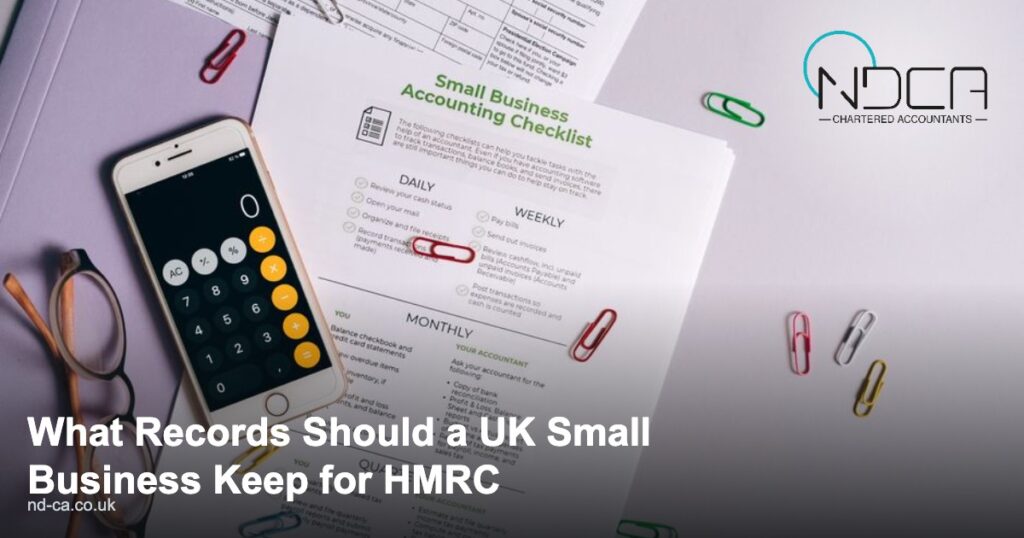
What Records Should a UK Small Business Keep for HMRC
Find out exactly what business records HMRC expects you to keep, for how long and how to organise…
Ready to fix the books?
Share where your records are kept and any deadline coming up, and we will map out the clean-up with you. No obligation, and no awkward phone call to your current accountant.