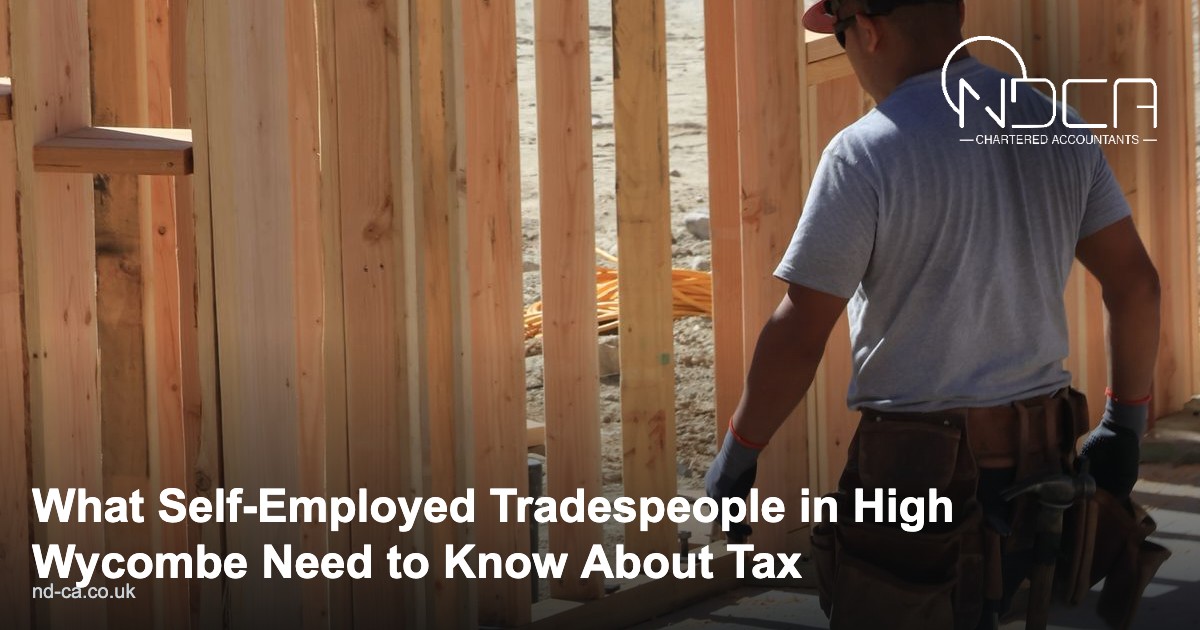
High Wycombe has a long history as a centre for furniture making and manufacturing, and today supports a wide base of tradespeople and small construction businesses working across the town and the wider Chilterns area. Most start out as sole traders, which is the right structure for a lot of tradespeople, but it comes with tax obligations that are easy to get wrong if you’re managing them alongside a full day of work on site.
- Self assessment basics for tradespeople
- Tools, van costs, and other allowable expenses
- CIS if you work as a subcontractor
- Watching the VAT threshold as you grow
- When it’s worth moving to a limited company
Self assessment basics for tradespeople
As a sole trader, you need to register with HMRC, keep records of income and expenses, and file a self assessment return each year with tax paid by 31 January. The most common mistake isn’t the filing itself, it’s not putting money aside through the year, which turns a manageable tax bill into a cash flow crisis every January.
Tools, van costs, and other allowable expenses
Tools and equipment, van running costs (or mileage if you prefer that method), protective clothing, and trade insurance are all generally allowable against your income. Tradespeople who keep receipts and records through the year, rather than trying to remember everything at tax return time, consistently claim more and pay less tax as a result.
CIS if you work as a subcontractor
If you work as a subcontractor for a larger contractor, tax will usually be deducted from your payments under CIS before you’re even paid. This isn’t your final tax bill; it’s paid on account, and most subcontractors are due money back once their actual liability is calculated properly against what’s already been deducted.
Watching the VAT threshold as you grow
As your trade business grows, it’s worth tracking your rolling 12-month turnover against the VAT threshold rather than only checking at year-end. Registering in good time, rather than reactively after you’ve already gone over, avoids penalties and a scramble to raise VAT-inclusive invoices retrospectively.
When it’s worth moving to a limited company
A limited company can reduce your overall tax bill once your profits reach a certain level, and offers some liability protection, but it comes with more admin and less flexibility over how and when you take money out. For many tradespeople, sole trader status remains the right choice for years before a limited company makes sense.
NDCA works with tradespeople and small construction businesses across High Wycombe on a fixed monthly fee, with a named accountant who understands CIS and self assessment for the trades.
Can you help me claim back CIS deductions?
Yes, we file your self assessment return properly to claim back any CIS tax that’s been over-deducted through the year.
Do you handle van and mileage expenses correctly?
Yes, we help you choose between actual costs and mileage rates, whichever works out better for your situation, and keep records that support the claim.
Do you have an office in High Wycombe?
No. NDCA is remote first, with trade clients across the UK. High Wycombe clients work with us over video and phone, fitting around site hours.
Areas we cover
NDCA works with clients across the following regions. If you’re based in one of these areas, our team can help with the accounting issues covered in this article.